
Những kẻ xuất chúng, the Vietnamese title of Outliers, is one of those rare cases where the translated title may be even better than the English original. It captures the greatness, and a touch of swagger too.
Walk into a bookstore, get drawn to this book, pick it up, look it over, glance at the table of contents... and you’ll most likely... put it right back. The chapter titles and quotes in the contents give you no idea what to expect. But if you’re intrigued enough to pick it up, trust me and buy it without a second thought. Outliers is one of the best books I’ve ever read, gripping in every little story.
For unto everyone that hath shall be given, and he shall have abundance
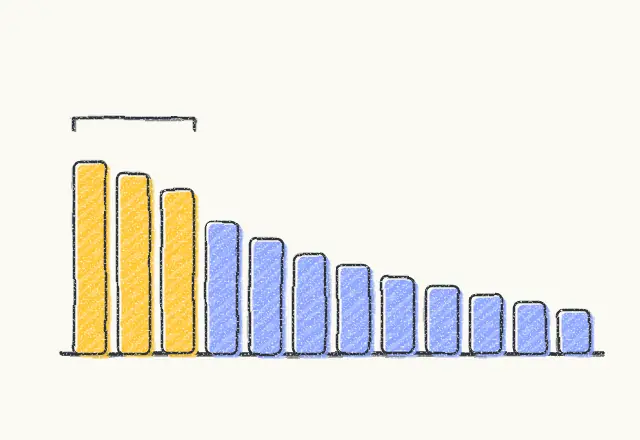

The book opens with ice hockey in Canada and a fascinating statistic about the birthdays of professional players. The author shows how the small edge of being a few months older, for kids born early in the year, gets them noticed and developed more, and so on and on... until that tiny early advantage turns them into professionals while the others are forgotten. The author proposes a fix for this in the book, but it still leaves many questions open. It probably needs more thought from educators and guidance from parents.
10,000 hours of practice

With the 10,000-hour rule, the author leads us to the roots of the extraordinary talent of Bill Joy, Bill Gates, the Beatles, and master violinists and pianists. These are fascinating stories: the Beatles playing nonstop in Hamburg, 8 hours a day, 7 days a week, forging a band that was “nothing special” into a legend; or the lucky breaks that gave Bill Joy and Bill Gates time to “play” with computers that few people had back then, ready for the tech revolution to come.
Ten thousand hours of practice is required to achieve the level of mastery of a world-class expert, in anything.
IQ 195
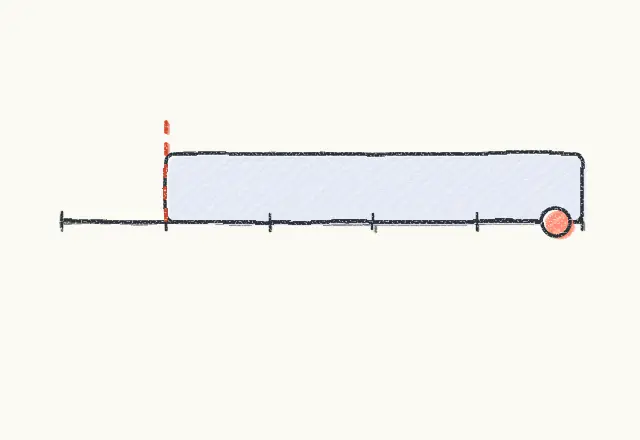

In chapter 3 you meet Christopher Langan, a man with an IQ of 195, higher than many geniuses we know, with his own research on the universe, yet not very successful in life. What’s going on? The author’s answer: “To some extent, IQ is a measure of innate ability. But social savvy is knowledge. It’s a set of skills that have to be learned.” And Chris’s family background never gave him the chance to learn them.
Once someone has reached an IQ of around 120, having additional IQ points doesn’t seem to translate into any measurable real-world advantage.
Jewish success
The Joe Flom chapter explores the success of Jewish people. Just when I thought I was behind on this topic, with so many books about Jewish people published lately, I found a chapter hidden right inside this book (“hidden” because the chapter title gives you no clue). Malcolm Gladwell’s main explanation is not their intellectual culture but the hardship, the life far from home, and having to work every kind of trade, which turned them into professionals.
The times you’re born into
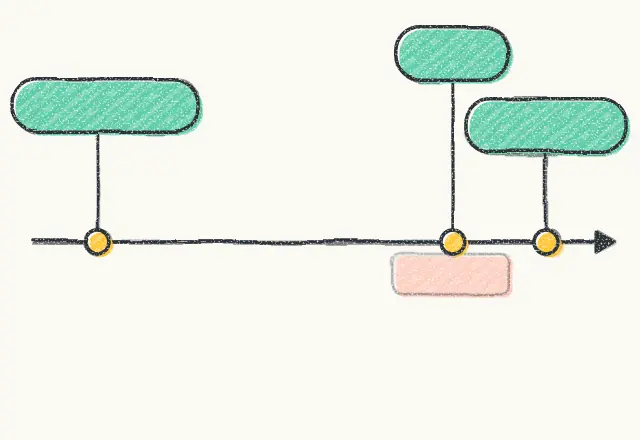

Read Outliers to see how the times have shaped whole generations of great people, but also to feel the pain of those born into the terrible moments of history:
For a young man who would become a lawyer, being born in the early 1930s was a magical time, just as being born in 1955 was a gift for a software programmer, or being born in 1835 was an opportunity for an entrepreneur.
She cried over the death of her friends in the 1918 flu epidemic. That generation, my parents’ generation, went through so much. They lived through that epidemic, which took a tenth of the world’s population. Fear in the streets. Watching friends die. And then World War I, then the Depression, then World War II. They didn’t stand much of a chance.
A culture of honor
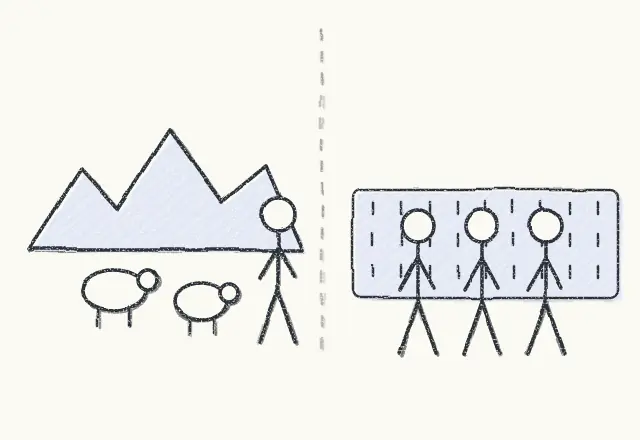

Outliers gathers quite a few fascinating stories (all the more fascinating once you learn the explanations behind them). At the start of part two, you’ll learn about the “culture of honor”, violent feuds straight out of the Wild West, and of course the explanation behind them:
If you live on some rocky, hilly land, you can’t farm. You have to keep goats or sheep, and the culture that grows up around herding is very different from the culture that grows up around farming. A farmer’s survival depends on the cooperation of others in the community. But a herdsman is on his own. A farmer doesn’t have to worry that his livelihood will be stolen in the night, because crops can’t easily be carried off, unless, of course, a thief wants the trouble of harvesting an entire field himself. But a herdsman has plenty to worry about. He lives under the constant threat of ruin through the loss of his animals. So he has to be aggressive: he has to make it clear, through his words and deeds, that he is not weak. He has to be willing to fight in response to even the slightest challenge to his reputation.
When we avoid reality, planes crash
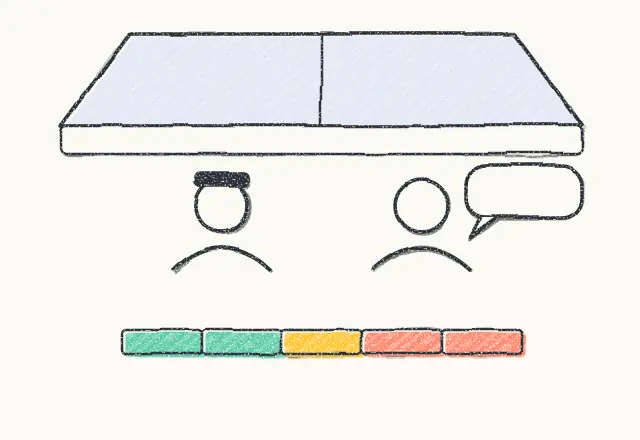

Right after that, you’re taken up in the air to study the “ethnic theory of plane crashes”, with gripping details from real accidents in history. “Most plane crashes are the result of an accumulation of minor difficulties and seemingly trivial malfunctions”, and those mostly come from problems in teamwork and communication. Specifically, the author points to each country’s own culture: the Power Distance Index, meaning whether bosses are approachable and whether you can speak up frankly to those “above” you.
Historically, planes are more likely to crash when the captain is in the flying seat... Planes are safer when the least experienced pilot is flying, because it means the second pilot isn’t going to be afraid to speak up.
If you use English, you may notice something Gladwell describes in the book: a kind of substitute identity. After several terrible accidents, Korean pilots were trained to use English to escape the constraints of their own language.
Photos from the book
 The back cover
 The inside flap and the title page
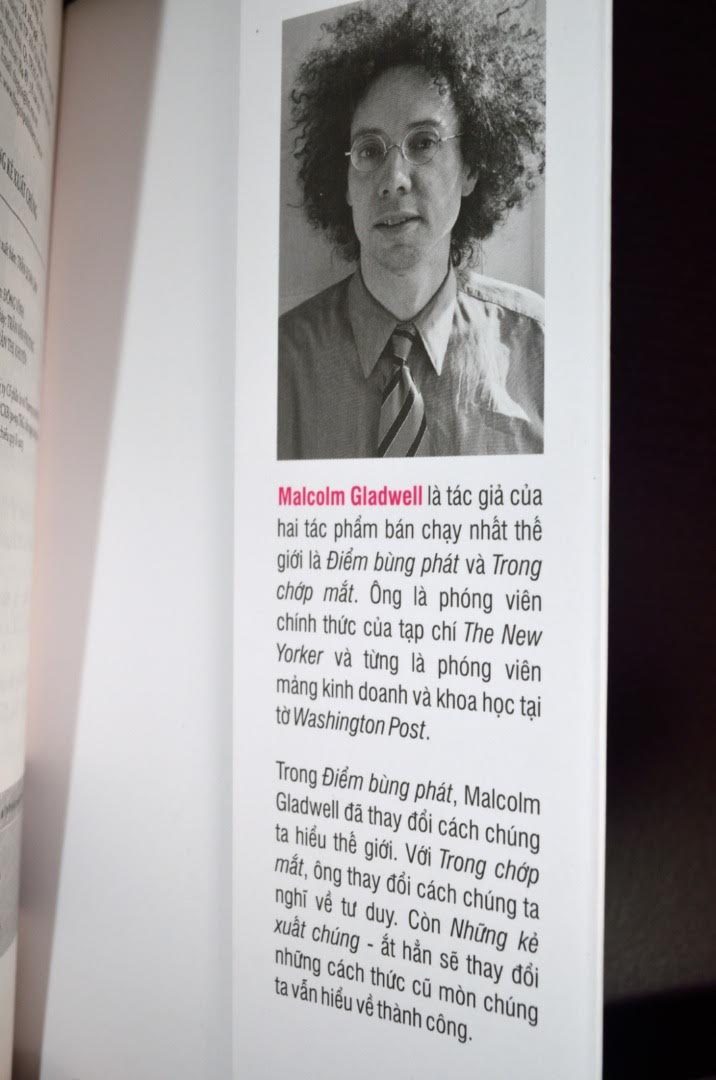 The flap about Malcolm Gladwell
 The table of contents, Vietnamese edition
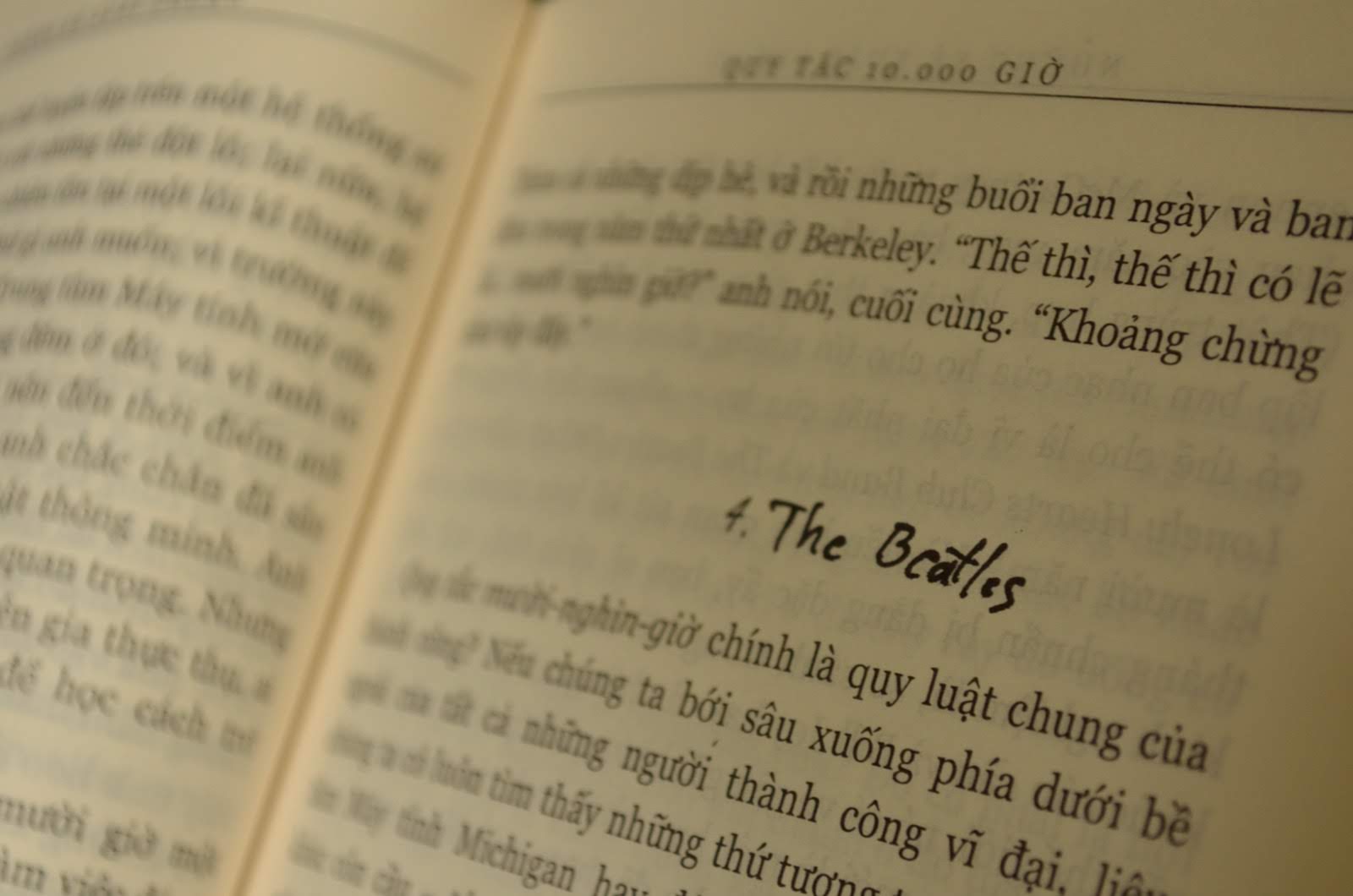 “The 10,000-Hour Rule”, with a note: “The Beatles”
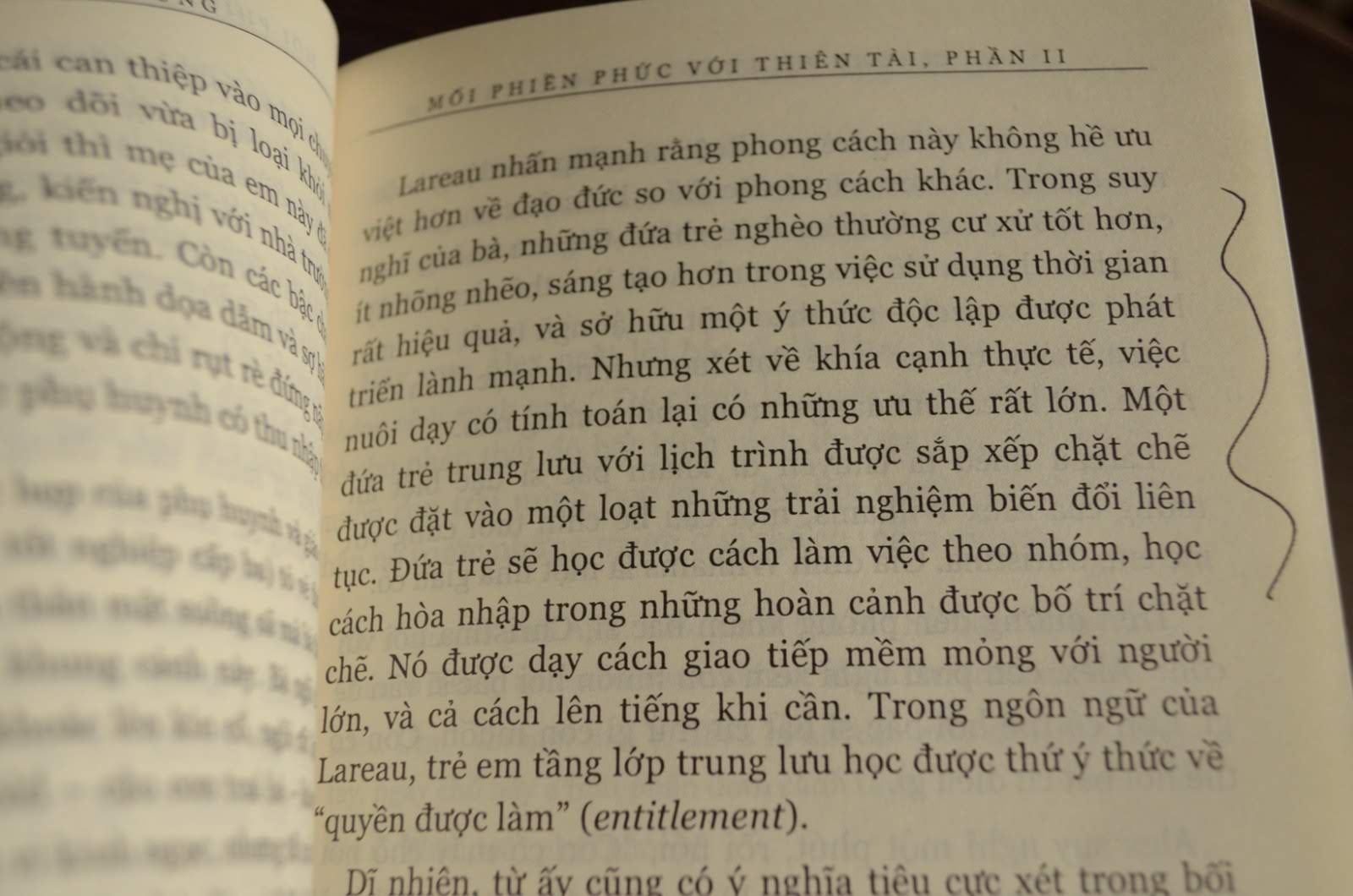 “The Trouble with Geniuses, Part 2”
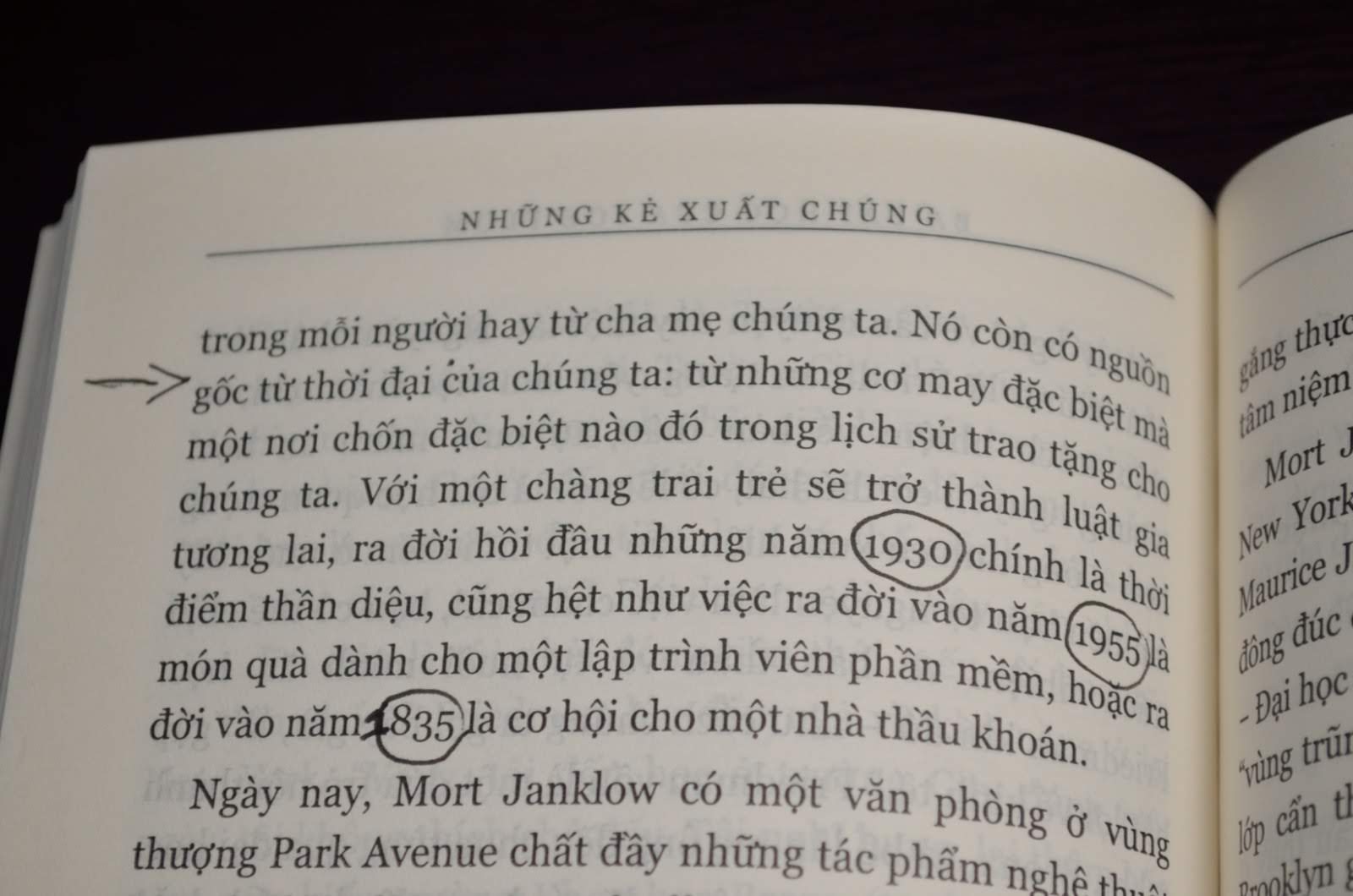 1930, 1955 and 1835, circled
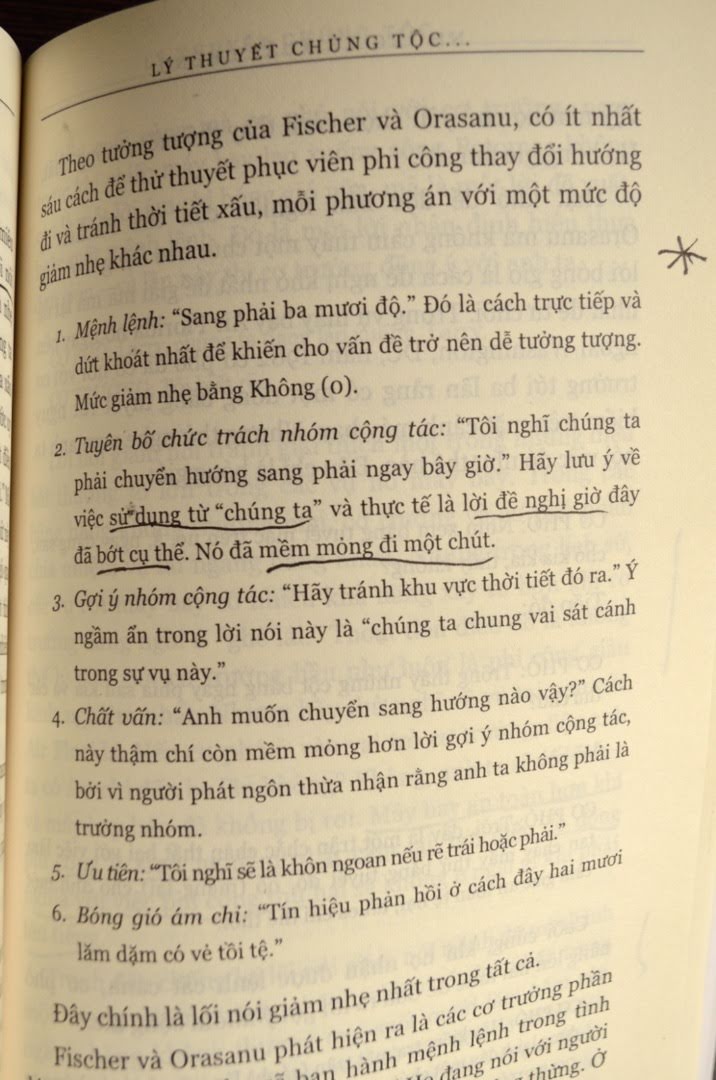 “The Ethnic Theory of Plane Crashes”
Translated from the original Vietnamese review. Quotes are translated back from the Vietnamese edition, so their wording may differ from Gladwell’s original.